
How to Choose a Wig: A Practical Guide for Your First Time
How to choose a wig with confidence.
A clear guide to cap types, hair fibres, and what to look for in your first wig
How to choose a wig with confidence.
A clear guide to cap types, hair fibres, and what to look for in your first wig
If you have never bought a wig before, the choices can feel overwhelming. Caps, lace fronts, monofilament tops, hand tied construction, synthetic fibres, heat defiant blends, density levels, and price points that range from approachable to significant. It is a lot to take in, especially when you are making the decision during a difficult time.
This guide is designed to give you the language and the understanding you need to walk into a wig fitting feeling informed rather than uncertain. By the end, you will know what to look for, what to ask, and what genuinely matters when you are choosing a wig for the first time.
What the Cap Actually Is and Why It Matters
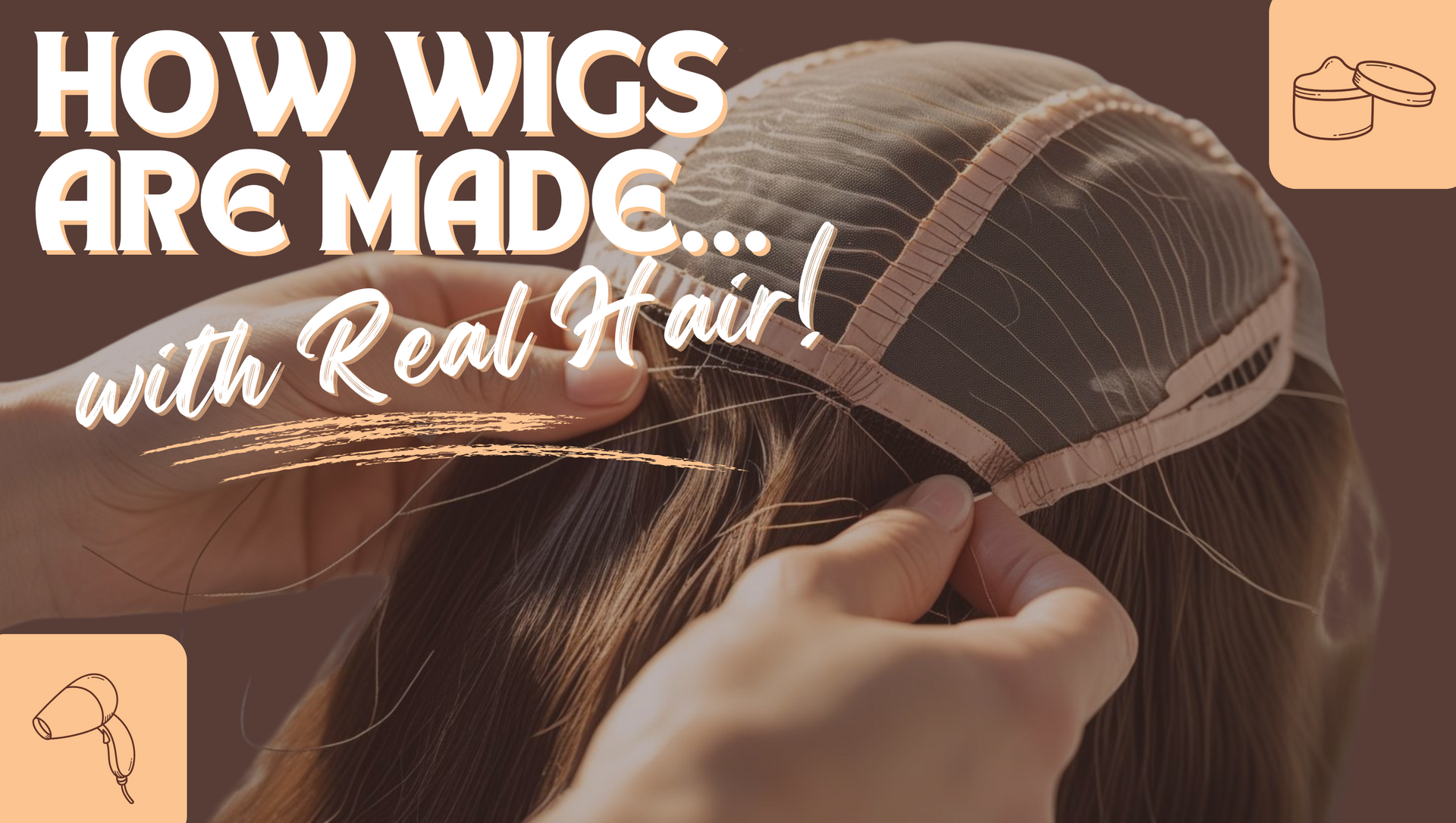
The cap is the foundation of every wig. It is the part that holds the hair in place, sits against your scalp, and determines how natural the finished wig looks. The cap is also where most of the price difference between wigs comes from, because cap construction is what separates a basic style from a premium one.
There are four common cap types you will come across, and each one offers something different in terms of realism, comfort, and cost.
Basic Cap Wigs: A Practical Starting Point
A basic cap has a velvet front and machine-stitched lines of fabric called wefting that hold the hair in place. The wefting is open and stretchy, which means the wig breathes well and is comfortable to wear, but the front hairline is more defined and harder to disguise without a fringe.
To soften the appearance, basic cap wigs include tiny fibres called permatease woven into the cap. Permatease adds volume and helps hide the wefting, and you can shape the style by gently shaking the wig and using your fingertips to lift the hair where you want more body.
Basic cap wigs do not give the most natural appearance, but they are budget-friendly, available in a wide range of styles, and offer a perfectly good experience for someone who is comfortable wearing a fringe or a styled look that frames the face.
Lace Front Wigs: A Realistic Hairline
Adding a lace front to a basic cap transforms the hairline. Instead of a hard velvet edge, the lace front has hand-tied fibres that mimic the look of hair growing naturally from the scalp. The fibres can move in any direction, which means you can style the hair away from your face without revealing where the wig begins.
Lace front wigs are a popular choice because they balance affordability with realism. You get the benefit of a believable hairline without the higher price tag of a fully hand-tied wig. For many first-time wig wearers, this is the level where the wig stops looking like a wig and starts looking like hair.
Monofilament Tops: Versatility and Natural Movement
Monofilament is a sheer, breathable material used at the crown of the wig. Each fibre is knotted into the monofilament either singly or in small clusters, which mimics how hair grows from a scalp. This creates the illusion of natural growth and gives the wig a more lifelike appearance from above.
Some wigs have a narrow strip of monofilament that creates a fixed parting line. Others have a full monofilament top, which allows you to part the hair anywhere across the crown. A full monofilament top gives you the most styling versatility because you can change the parting day to day, just as you would with your own hair.
The back and sides of a monofilament wig still use machine-stitched wefting, often with some permatease, but there is never permatease in the monofilament section itself. This is why monofilament wigs tend to have lower density than basic cap wigs, which is something worth noting if you prefer a fuller look.
Hand Tied Caps: The Most Natural Option
A hand tied cap is the most realistic and most comfortable wig you can buy. Every fibre across the entire wig is tied by hand into the cap, either singly or in small clusters, creating the illusion of natural growth across the whole piece, not just the crown.
Hand tied wigs are lightweight, breathable, and typically come in low to medium density. There is no permatease anywhere in a hand tied cap, which contributes to the natural appearance and the lighter feel against your scalp.
The trade-off is cost. Hand tied wigs sit at the higher end of the price range because of the time and skill involved in their construction. For wearers who plan to wear their wig daily, who have sensitive skin, or who want the most natural look possible, the investment is often worth it.
A Note on Density and Why It Matters for First-Time Wearers
If you are choosing a wig because of hair loss, regardless of the cause, a lower density wig is often a better first choice. The amount of hair feels closer to natural, it is easier to style, and it is easier to get used to wearing. A high density wig can feel like a lot of hair when you are not used to having it, and that adjustment can be uncomfortable in the early weeks.
Permatease also plays a role in how the wig feels and looks. Wig descriptions rarely mention how much permatease a wig contains, so the only reliable way to check is to feel it with your fingertips during a fitting. If you are looking for a softer, more natural appearance, a wig with less permatease will usually suit you better.
Synthetic, Heat Friendly, or Human Hair: Choosing the Fibre
Once you have decided on the cap construction, the next decision is the fibre. There are three main options, and each one has its place depending on what you want from your wig.
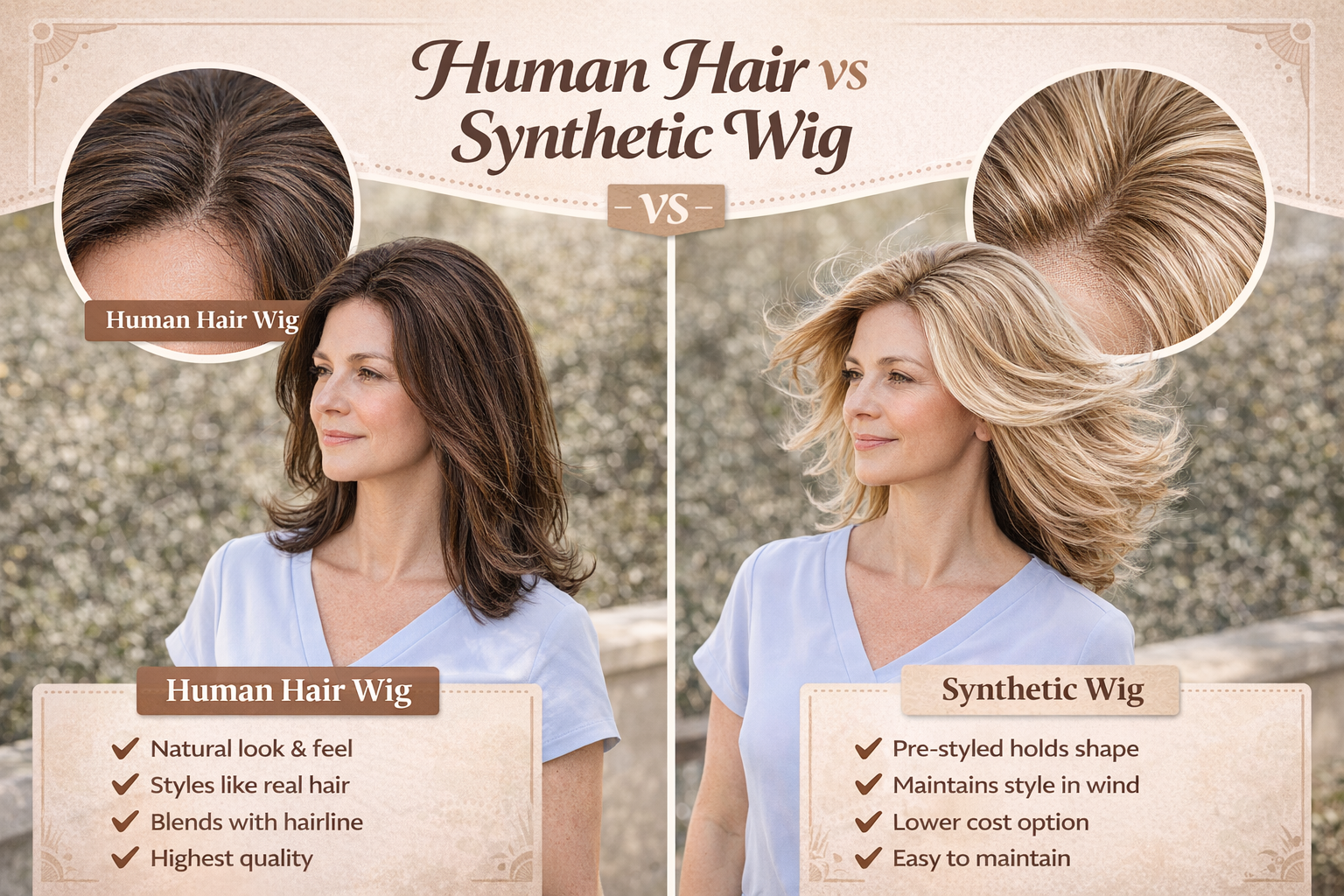
Standard synthetic fibre has the style permanently set into the hair. A wavy synthetic wig will keep its waves through every wash. A straight synthetic wig will stay straight. The advantage is that styling is essentially done for you. The limitation is that you cannot use heat tools to change the look.
Heat friendly fibre, sometimes called heat defiant or heat resistant, allows you to use heated brushes or straighteners up to the temperatures the manufacturer recommends. This gives you more flexibility to change the style. Some heat friendly fibres have a slightly shinier appearance when new, but this softens with washing and can be further reduced with a light dusting of dry shampoo.
Human hair wigs offer the most realistic appearance and the widest styling options, including colouring and heat styling without restrictions. They sit at the highest price point and require more maintenance, but for many wearers the realism justifies the investment. Modern synthetic and heat friendly fibres have advanced significantly, though, and the texture and feel are often remarkably close to human hair.
Frequently Asked Questions
How do I know which wig cap is right for me?
The right wig cap depends on your priorities. If budget is the main consideration, a basic cap with a fringe gives you a wide range of affordable styles. If you want a realistic hairline, a lace front cap is a strong middle-ground option. If you want maximum versatility in styling, look for a full monofilament top. If comfort and realism matter most and budget allows, a hand tied cap is the most natural option available.
What is the difference between synthetic and heat friendly wig fibre?
Synthetic fibre has the style permanently set into the hair and cannot be heat styled. Heat friendly fibre allows you to use heated tools up to the manufacturer's recommended temperature, giving you more styling flexibility. Heat friendly fibres can appear slightly shinier when new, but this softens with washing.
Should I choose a low density or high density wig for my first wig?
If you are new to wearing wigs, especially due to hair loss, a low density wig is usually easier to adjust to. The amount of hair feels more natural, the wig is lighter to wear, and the styling is more manageable. You can always move to a higher density wig later once you are comfortable.
What is permatease in a wig?
Permatease is a tiny, crimped fibre woven into a wig cap to add volume and hide the machine-stitched wefting. Basic cap wigs contain the most permatease, monofilament tops contain none in the monofilament section, and hand tied caps contain none at all. The amount of permatease affects how natural the wig looks and feels.
How can I tell how much permatease a wig has?
Wig descriptions rarely list permatease amounts, so the most reliable way to check is to feel the inside of the cap with your fingertips during a fitting. A wig with less permatease will feel softer against your scalp and will usually have a more natural appearance, particularly in lower density styles.
Choosing a Wig That Suits You
The best wig is not the most expensive one or the one with the most features. It is the one that fits your lifestyle, suits your needs, and leaves you feeling like yourself when you wear it.
For some people, that is a budget-friendly basic cap with a fringe and a style they love. For others, it is a hand tied human hair wig that feels exactly like their own hair. Most people land somewhere in the middle, with a lace front and monofilament top in a heat friendly fibre, which gives a beautiful balance of realism, versatility, and comfort.
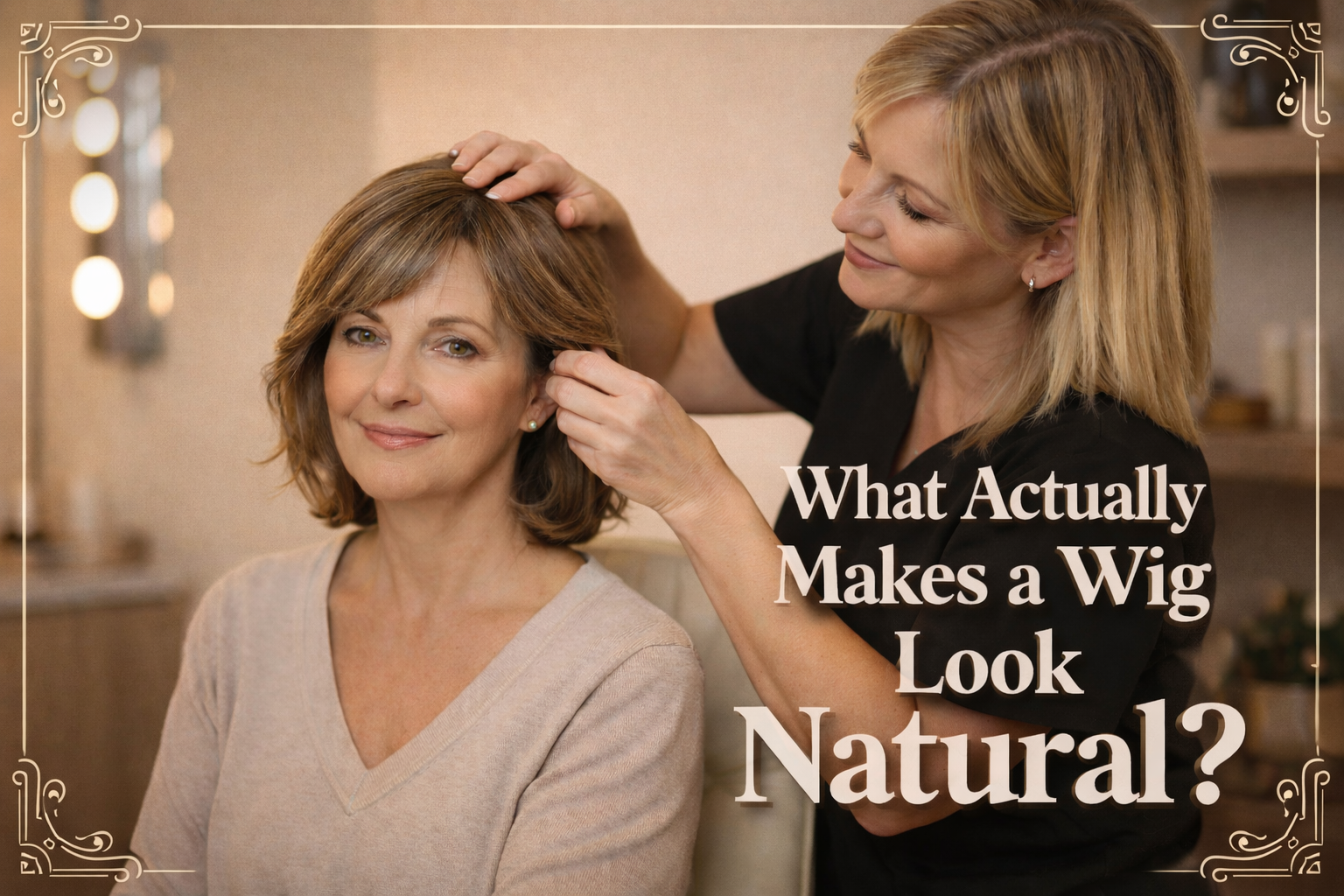
The team at Creations Wig Studio is here to help you work through these decisions without pressure. Whether this is your first wig or your fifth, you are welcome to come in for a fitting, try different cap types, feel the difference between fibres, and find the wig that genuinely suits you.
The best way to choose a wig is to feel the difference yourself. Book a complimentary fitting at Creations Wig Studio and try on the cap types, densities, and fibres that suit you. We'll guide you through your options in a calm, private space, with no pressure to buy.
Call (07) 3823 1083 or email info@creationswigstudio.com.au to arrange a time that works for you.